



 Position:Home >> Knowledge >> How to choose
 Update time:2025-12-14 15:05:57
 Visit:556
 Butterfly valves are widely used in industrial pipeline systems for flow control and isolation. Among the most common options, soft-sealed butterfly valves and hard-sealed butterfly valves each offer distinct advantages. Choosing the right type is critical for ensuring system safety, long service life, and cost efficiency. This article explains how to choose between soft-sealed and hard-sealed butterfly valves based on working conditions, performance requirements, and application needs, while introducing the professional solutions provided by YEKE VALVE.
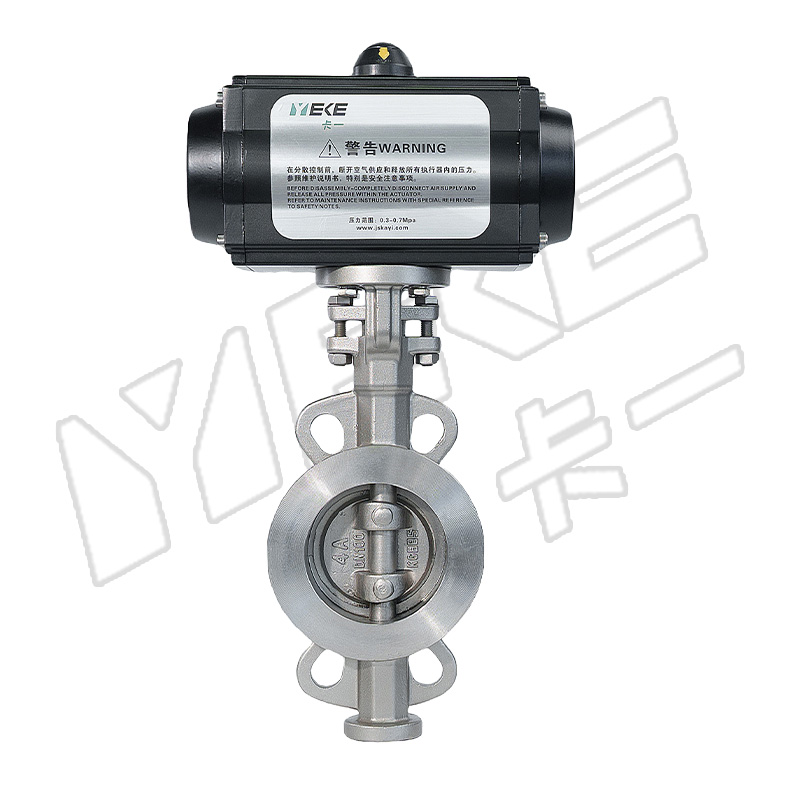
Soft-sealed butterfly valves use elastic sealing materials such as EPDM, NBR, PTFE, or other polymers. These materials allow the valve disc to form a tight seal with minimal operating torque.
Advantages of Soft-Sealed Butterfly Valves:
Excellent sealing performance with near zero leakage
Low torque, easy operation
Lightweight structure and economical cost
Ideal for frequent operation
Limitations:
Limited temperature resistance
Shorter service life in abrasive or corrosive media
Typical Applications:
Water supply and drainage systems, HVAC, food and beverage processing, and low-pressure chemical pipelines.
Hard-sealed butterfly valves, also known as metal-seated butterfly valves, use metal or metal-alloy sealing surfaces. They are designed to withstand harsh operating conditions.
Advantages of Hard-Sealed Butterfly Valves:
Suitable for high temperature and high pressure
Strong resistance to wear, erosion, and corrosion
Long service life in severe working environments
Often fire-safe and suitable for critical applications
Limitations:
Higher operating torque
Higher initial cost
Typical Applications:
Oil and gas, petrochemical plants, power generation, steam systems, metallurgy, and heavy industrial processes.
Low to medium temperature → Soft-sealed butterfly valve
High temperature or steam → Hard-sealed butterfly valve
Low to medium pressure systems → Soft-sealed design
Medium to high pressure systems → Hard-sealed design
Clean water or non-corrosive fluids → Soft-sealed
Abrasive, corrosive, or high-velocity media → Hard-sealed
Bubble-tight shutoff → Soft-sealed butterfly valve
Durability under harsh conditions → Hard-sealed butterfly valve
Frequent on/off or throttling → Soft-sealed (lower torque)
Infrequent but critical operation → Hard-sealed
Soft-sealed butterfly valves are generally more cost-effective for standard applications, while hard-sealed butterfly valves offer higher durability and longer service life in extreme environments. The right choice should balance initial cost, maintenance frequency, and expected service life.
Choosing the right butterfly valve can be complex, especially for industrial projects with strict technical requirements. YEKE VALVE is a professional industrial valve manufacturer with extensive experience in both soft-sealed and hard-sealed butterfly valves. With advanced production equipment, strict quality control, and skilled engineering teams, YEKE VALVE provides reliable valve solutions for diverse industries worldwide.
From material selection and structural design to testing and after-sales service, YEKE VALVE supports customers throughout the entire project lifecycle. Whether you need economical soft-sealed valves for water systems or high-performance hard-sealed valves for demanding industrial environments, YEKE VALVE can deliver customized solutions tailored to your needs.
For expert support and detailed product information, visit www.yekevalve.com.
Knowing how to choose between soft-sealed and hard-sealed butterfly valves is essential for achieving safe, efficient, and long-lasting system performance. By carefully evaluating temperature, pressure, medium, and sealing requirements—and by working with a trusted manufacturer like YEKE VALVE—you can ensure optimal valve selection and dependable operation in any application.

E-mail: wellwang557757@163.com

Tel/WhatsApp: +86 13812557757

Address: No. 2, Fandao Fanxing Road,Gaocheng Town, Yixing City,Jiangsu Province

Copyright © 2026 YEKE All Rights Reserved.

 WhatsApp
 Quote
Quote Tel
Tel
+86 13812557757
 Top
Top 


 Production Equipment