



 Position:Home >> Knowledge >> How to choose
 Update time:2026-03-25 17:00:10
 Visit:787

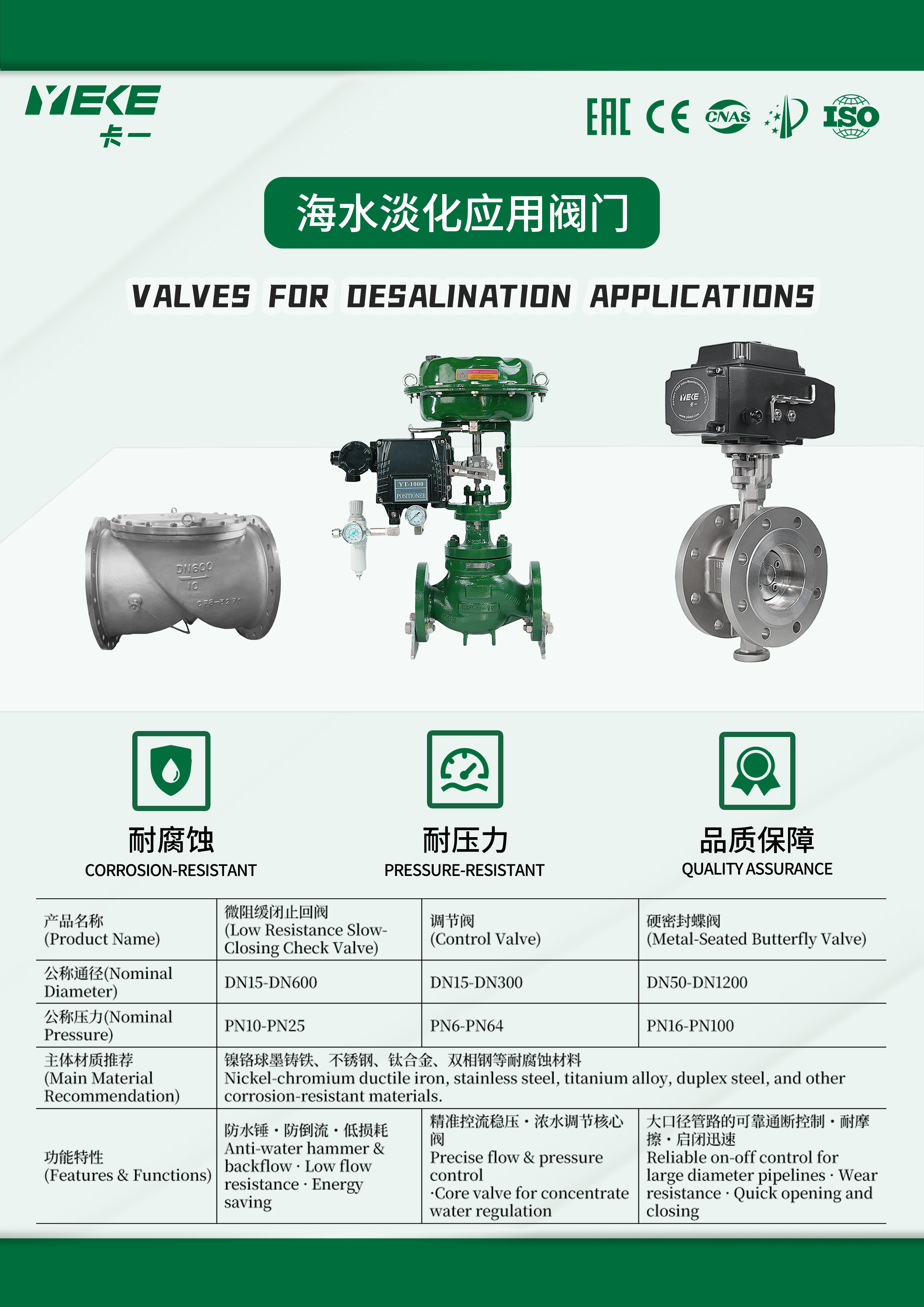
Seawater desalination has become a critical solution to global water scarcity, especially in arid regions like Central Asia and coastal Southeast Asia. At the heart of every reverse osmosis (RO) desalination plant, high-performance valves ensure stable operation, precise flow control, and long-term reliability in aggressive seawater environments. This guide breaks down the essential valve types, material selection, and best practices tailored to desalination applications.
Ⅰ. Key Challenges of Seawater Desalination Valves
Seawater is a highly corrosive medium containing chlorides, salts, and suspended solids. Valves for desalination must meet strict requirements:
a. Corrosion Resistance: Withstand chloride-induced corrosion and chemical attack from cleaning agents.
b. High Pressure Capability: Handle the high pressures of RO membrane systems.
c. Reliable Sealing: Prevent leakage in critical high-pressure and concentrate streams.
d. Low Maintenance: Minimize downtime in remote or large-scale plant operations.
Ⅱ. Core Valve Solutions for Desalination
A. Low Resistance Slow-Closing Check Valve
Best for: Pump discharge lines, intake pipelines, and systems requiring water hammer protection.
Key Features: Anti-water hammer, anti-backflow, low flow resistance, and energy-saving operation.
Why it works: The slow-closing mechanism eliminates destructive pressure surges, protecting pumps and pipelines from damage.
B. Control Valve
Best for: RO high-pressure systems, concentrate water regulation, and chemical dosing lines.
Key Features: Precise flow & pressure control, core valve for concentrate water regulation, and stable performance under high pressure.
Why it works: It maintains consistent pressure across RO membranes, optimizing water recovery and preventing membrane damage.
C. Metal-Seated Butterfly Valve
Best for: Large-diameter intake/outfall pipelines, circulating water systems, and high-pressure isolation.
Key Features: Reliable on-off control for large diameter pipelines, wear resistance, and quick opening/closing.
Why it works: The metal-seated design provides durable, tight shut-off in high-flow, high-abrasion seawater conditions.
Ⅲ. Material Selection for Seawater Service
The right material is critical to extending valve life in seawater. YEKE recommends:
Nickel-chromium ductile iron: Cost-effective corrosion resistance for main intake pipelines.
Stainless steel (SS316L): Excellent chloride resistance for chemical dosing and medium-pressure lines.
Titanium alloy: Ultimate corrosion resistance for high-salinity, high-temperature applications.
Duplex steel (2205/2507): High strength and corrosion resistance for high-pressure RO sections.

E-mail: wellwang557757@163.com

Tel/WhatsApp: +86 13812557757

Address: No. 2, Fandao Fanxing Road,Gaocheng Town, Yixing City,Jiangsu Province

Copyright © 2026 YEKE All Rights Reserved.

 WhatsApp
 Quote
Quote Tel
Tel
+86 13812557757
 Top
Top 


 Production Equipment